Search results for: “shops”

  • NAAC Quality Indicator

  • Criteria Aspects

    Criteria -1: Curricular Aspects

    1.1 Curricular Planning and Implementation
    1.1.1 The Institution ensures effective curriculum planning and delivery through a well-planned and documented process including Academic calendar and conduct of continuous internal Assessment
    1-1-1additional-pdf
    1.2 Academic Flexibility
    1.2.1 Number of Certificate/Value added courses offered and online courses of MOOCs, SWAYAM, NPTEL etc. (where the students of the institution have enrolled and successfully completed during the last five years)
    1.2.2 Percentage of students enrolled in Certificate/ Value added courses and also completed online courses of MOOCs, SWAYAM, NPTEL etc. as against the total number of students during the last five years
    1.2.2.1 Number of students enrolled in Certificate/ Value added courses and also completed online courses of MOOCs, SWAYAM, NPTEL etc. as against the total number of students during the last five years
    1.3 Curriculum Enrichment
    1.3.1 Institution integrates crosscutting issues relevant to Professional Ethics, Gender, Human Values, Environment and Sustainability in transacting the Curriculum
    1.3.2 Percentage of students undertaking project work/field work/ internships (Data for the latest completed academic year)
    1.3.2.1 Number of students undertaking project work/field work / internships.
    GENDER CHAMPION
    1.4 Feedback System
    1.4.1 Institution obtains feedback on the academic performance and ambience of the institution from various stakeholders, such as Students, Teachers, Employers, Alumni etc. and action taken report on the feedback is made available on institutional website.
    2018 ATR 2019 ATR 2020 ATR  2021 ATR 2022 ATR

    Criteria -2: Teaching Learning & Evaluation

    2.1 Student Enrollment and Profile
    2.1.1 Enrolment percentage
    2.1.1.1  Number of seats filled year wise during last five years (Only first year admissions to be considered) 
    2.1.1.2 Number of sanctioned seats year wise during last five years
    2.1.2 Percentage of seats filled against reserved categories (SC, ST, OBC etc.) as per applicable reservation policy for the first year admission during the last five years
    2.1.2.1  Number of actual students admitted from the reserved categories year wise during last five years (Exclusive of supernumerary seats)
    2.1.2.2  Number of seats earmarked for reserved category as per GOI/ State Govt rule year wise during the last five years
    ENROLMENT STATEMENT
    2.2 Student Teacher Ratio
    2.2.1 Student – Full time Teacher Ratio (Data for the latest completed academic year)
    2.3 Teaching- Learning Process
    2.3.1 Student centric methods, such as experiential learning, participative learning and problem solving methodologies are used for enhancing learning experiences and teachers use ICT- enabled tools including online resources for effective teaching and learning process
    ICT TOOLS  2-3-11-pdf 2-3-12-pdf Peer Mediation PCC Remedial Classes Observational Visit Orientation Programme
    2.4 Teacher Profile and Quality
    2.4.1 Percentage of full-time teachers against sanctioned posts during the last five years
    2.4.1.1  Number of sanctioned posts year wise during the last five years
    2.4.2 Percentage of full time teachers with NET/SET/SLET/ Ph. D./D.Sc. / D.Litt./L.L.D. during the last five years (consider only highest degree for count)
    2.4.2.1  Number of full time teachers with NET/SET/SLET/Ph. D./ D.Sc. / D.Litt./L.L.D year wise during the last five years
    APPOINTMENT LETTER NET CERTIFICATES
    2.5 Evaluation Process and Reforms
    2.5.1 Mechanism of internal/ external assessment is transparent and the grievance redressal system is time- bound and efficient
    2018 – 2019 2019 – 2020 2020 – 2021 2021 – 2022 2-5-1-pdf
    2.6 Student Performance and Learning Outcomes
    2.6.1 Programme Outcomes (POs) and Course Outcomes (COs) for all Programmes offered by the institution are stated and displayed on website
    2.6.2 Attainment of POs and COs are evaluated. Explain with evidence in a maximum of 500 words
    2.6.3 Pass percentage of Students during last five years (excluding backlog students)
    2.6.3.1  Number of final year students who passed the university examination year wise during the last five years
    2.6.3.2  Number of final year students who appeared for the university examination year-wise during the last five years
    RESULT ANALYSIS
    2.7 Student Satisfaction Survey
    2.7.1 Online student satisfaction survey regarding teaching learning process

    Criteria -3: Research, Innovations and Extension

    3.1 Resource Mobilization for Research
    3.1.1 Grants received from Government and non-governmental agencies for research projects / endowments in the institution during the last five years (INR in Lakhs)
    3.1.1.1 Total Grants from Government and non-governmental agencies for research projects / endowments in the institution during the last five years (INR in Lakhs)  
    3.2 Innovation Ecosystem
    3.2.1 Institution has created an ecosystem for innovations, Indian Knowledge System (IKS),including awareness about IPR, establishment of IPR cell, Incubation centre and other initiatives for the creation and transfer of knowledge/technology and the outcomes of the same are evident
    3.2.2 Number of workshops/seminars/conferences including on Research Methodology, Intellectual Property Rights (IPR) and entrepreneurship conducted during the last five years
    3.2.2.1  Total number of workshops/seminars/conferences including programs conducted on Research Methodology, Intellectual Property Rights (IPR) and entrepreneurship year wise during last five years
    3.3 Research Publications and Awards
    3.3.1 Number of research papers published per teacher in the Journals notified on UGC care list during the last five years
    3.3.1.1  Number of research papers in the Journals notified on UGC CARE list year wise during the last five years
    3.3.2 Number of books and chapters in edited volumes/books published and papers published in national/ international conference proceedings per teacher during last five years
    3.3.2.1  Total number of books and chapters in edited volumes/books published and papers in national/ international conference proceedings year wise during last five years
    Spirituality in Garo Women Challenges of Indian Elderly People and Scope of Social Work Intervention Contribution of NGOs in Covid -19 Relief: Nagaland in Perspective Higher Education in North- East India- Trends, Opportunities and Challenges Peer Mediation: A Model for Conflict Transformation Differently Abled Tribal Entrepreneurs of Manipur: A Case Study. Exploring the Scientific Research Social Entrepreneurship- An Ameliorating Factor for the Empowerment of Rural Women in Keralamedu Tluk From Cultures of Peace to Culture of Peace Contemporary Isssues of North East and Social Work Interventions Socio Demographic Profile of Domestic Workers in Chennai Border Trade and Rural Development: A tale of two bordering villages in Mizoram The Pochury of Nagaland and the Chakhesang of Manipur Pattern of Migration and Settlement among Migrants from Myanmar in Mizoram Enhancing Indo- Myanmar Trade with Special reference to Zokhawthar – Rih Border Sector Literature Review in the Field of Citation Analysis: A study
    3.4 Extension Activities
    3.4.1 Outcomes of Extension activities in the neighborhood community in terms of impact and sensitizing the students to social issues for their holistic development during the last five years.
    3.4.2 Awards and recognitions received for extension activities from government / government recognised bodies
    3.4.3 Number of extension and outreach programs conducted by the institution through organized forums including NSS/NCC with involvement of community during the last five years.
    3.4.3.1  Number of extension and outreach Programs conducted in collaboration with industry, community, and Non- Government Organizations through NSS/ NCC etc., year wise during the last five years
    3.5 Collaboration
    3.5.1 Number of functional MoUs/linkages with institutions/ industries in India and abroad for internship, on-the-job training, project work, student / faculty exchange and collaborative research during the last five years.

    Criteria -4: Infrastructure and Learning Resources 

    4.1 Physical Facilities
    4.1.1 The Institution has adequate infrastructure and other facilities for, teaching – learning, viz., classrooms, laboratories, computing equipment etc
      ICT – enabled facilities such as smart class, LMS etc. Facilities for Cultural and sports activities, yoga centre, games (indoor and outdoor), Gymnasium, auditorium etc (Describe the adequacy of facilities in maximum of 500 words.)  
    4.1.2 Percentage of expenditure for infrastructure development and augmentation excluding salary during the last five years
    4.1.2.1  Expenditure for infrastructure development and augmentation, excluding salary year wise during last five years (INR in lakhs)
    additionallink-pdf
    4.2 Library as a Learning Resource
    4.2.1 Library is automated with digital facilities using Integrated Library Management System (ILMS), adequate subscriptions to e-resources and journals are made. The library is optimally used by the faculty and students
      4.3 IT Infrastructure
    4.3.1 Institution frequently updates its IT facilities and provides sufficient bandwidth for internet connection Describe IT facilities including Wi-Fi with date and nature of updation, available internet bandwidth within a maximum of 500 words
    4.3.2 Student – Computer ratio (Data for the latest completed academic year)
    4.3.2.1  Number of computers available for students usage during the latest completed academic year:
      4.4 Maintenance of Campus Infrastructure
    4.4.1 Percentage expenditure incurred on maintenance of physical facilities and academic support facilities excluding salary component, during the last five years (INR in Lakhs)
    4.4.1.1 Expenditure incurred on maintenance of infrastructure (physical facilities and academic support facilities) excluding salary component year wise during the last five years (INR in lakhs)

    Criteria -5: Student Support and Progression

    5.1 Student Support
    5.1.1 Percentage of students benefited by scholarships and freeships provided by the institution, government and non-government bodies, industries, individuals, philanthropists during the last five years
    5.1.1.1  Number of students benefited by scholarships and freeships provided by the institution, Government and non-government bodies, industries, individuals, philanthropists during the last five years
    5.1.2 Following capacity development and skills enhancement activities are organised for improving students’ capability 
    1. Soft skills 
    2. Language and communication skills 
    3. Life skills (Yoga, physical fitness, health and hygiene) 
    4. ICT/computing skills 

    5.1.3 Percentage of students benefitted by guidance for competitive examinations and career counseling offered by the Institution during the last five years
    5.1.3.1  Number of students benefitted by guidance for competitive examinations and career counselling offered by the institution year wise during last five years
    5.1.4 The institution adopts the following for redressal of student grievances including sexual harassment and ragging cases 
    1. Implementation of guidelines of statutory/regulatory bodies 
    2. Organisation wide awareness and undertakings on policies with zero tolerance 
    3. Mechanisms for submission of online/offline students’ grievances 
    4. Timely redressal of the grievances through appropriate committees
    5.2 Student Progression
    5.2.1 Percentage of placement of outgoing students and students progressing to higher education during the last five years
    5.2.1.1  Number of outgoing students placed and / or progressed to higher education year wise during the last five years
    5.2.1.2  Number of outgoing students year wise during the last five years
    5.2.2 Percentage of students qualifying in state/national/ international level examinations during the last five years
    5.2.2.1 Number of students qualifying in state/ national/ international level examinations year wise during last five years (eg: IIT/JAM/NET/SLET/GATE/GMAT/GPAT/CLAT/CAT/ GRE/TOEFL/ IELTS/Civil Services/State government examinations etc.)
    5.3 Student Participation and Activities
    5.3.1 Number of awards/medals for outstanding performance in sports/ cultural activities at University / state/ national / international level (award for a team event should be counted as one) during the last five years
    5.3.1.1  Number of awards/medals for outstanding performance in sports/cultural activities at national/international level (award for a team event should be counted as one) year wise during the last five years
    5.3.2 Average number of sports and cultural programs in which students of the Institution participated during last five years (organised by the institution/other institutions)
    5.3.2.1  Number of sports and cultural programs in which students of the Institution participatedyear wise during last five years  
    5.4 Alumni Engagement
    5.4.1 There is a registered Alumni Association that contributes significantly to the development of the institution through financial and/or other support services.

    Criteria -6: Governance, Leadership and Management

    6.1 Institutional Vision and Leadership
    6.1.1 The institutional governance and leadership are in accordance with the vision and mission of the Institution and it is visible in various institutional practices such as NEP implementation, sustained institutional growth, decentralization, participation in the institutional governance and in their short term and long term Institutional Perspective Plan.
    organogramrevised2024-pdf institutionalpreparednessfornep-pdf neissractionplan2018final-pdf
    6.2 Strategy Development and Deployment
    6.2.1 The institutional perspective plan is effectively deployed and functioning of the institutional bodies is effective and efficient as visible from policies, administrative setup, appointment, service rules, and procedures, etc.
    6.2.2 Institution implements e-governance in its operations 
      1. Administration
      2. Finance and Accounts
      3. Student Admission and Support 
       4. Examination
    servicerules-pdf organogramrevised-pdf students erp system user interface- E-Governance Bill E-Governance Policy E-Governance Report Governing Board Meetings
      6.3 Faculty Empowerment Strategies
    6.3.1 The institution has performance appraisal system, effective welfare measures for teaching and non- teaching staff and avenues for career development/progression
    6.3.2 Percentage of teachers provided with financial support to attend conferences/workshops and towards membership fee of professional bodies during the last five years
    6.3.2.1  Number of teachers provided with financial support to attend conferences/workshops and towards membership fee of professional bodies year wise during the last five years
    6.3.3 Percentage of teaching and non-teaching staff participating in Faculty development Programmes (FDP), Management Development Programmes (MDPs) professional development /administrative training programs during the last five years
    6.3.3.1  Total number of teaching and non-teaching staff participating in Faculty development Programmes (FDP), Management Development Programmes (MDPs) professional development /administrative training programs during the last five years
    6.3.3.2  Number of non-teaching staff year wise during the last five years
    staff welfare policy financialsupporttoteacher-pdf Button facultyorientation201823-pdf certificates-pdf Insurance Recognition Appreciation Performance Appraisal Students Performance Appraisal Principal Leave Application
    6.4 Financial Management and Resource Mobilization
    6.4.1 Institution has strategies for mobilization and optimal utilization of resources and funds from various sources (government/ nongovernment organizations) and it conducts financial audits regularly (internal and external)
    2018 – 2019 2019 – 2020 2020 – 2021 2021- 2022 2022 – 2023 Audit Budget GB Grant Research Projects Contributions Research Projects NEISSR BUDGET 2018 – 2023
    6.5 Internal Quality Assurance System
    6.5.1 Internal Quality Assurance Cell (IQAC) has contributed significantly for institutionalizing the quality assurance strategies and processes. It reviews teaching learning process, structures & methodologies of operations and learning outcomes at periodic intervals and records the incremental improvement in various activities
    6.5.2 Quality assurance initiatives of the institution include:
      1.      Regular meeting of Internal Quality Assurance Cell (IQAC); quality improvement initiatives identified and implemented
      2. Academic and Administrative Audit (AAA) and follow-up action taken
      3. Collaborative quality initiatives with other institution(s) 
    4. Participation in NIRF and other recognized rankings 
    5. Any other quality audit/accreditation recognized by state, national or international agenciessuch as NAAC, NBA etc.  
    energyaudit-pdf Training Programme Discussion on Gender Based violence Link AAA & ATR AAA Certificate Value Added Certificate Course MOU Institutitions MOU NGO MOU Schools Green Audit NSS Environment NGO SCHOOL INSTITUTION remedial classes Various Programs VEDHIK IAS

    Criteria -7: Institutional Values and Best Practices

    7.1 Institutional Values and Social Responsibilities
    7.1.1 Institution has initiated the Gender Audit and measures for the promotion of gender equity during the last five years. Describe the gender equity & sensitization in curricular and co-curricular activities, facilities for women on campus etc., within 500 words
    7.1.2 The Institution has facilities and initiatives for 
    1. Alternate sources of energy and energy conservation measures
      2. Management of the various types of degradable and non degradable waste 
    3. Water conservation 
    4. Green campus initiatives
      5. Disabled-friendly, barrier free environment
    7.1.3 Quality audits on environment and energy regularly undertaken by the Institution. The institutional environment and energy initiatives are confirmed through the following 
    1 Green audit / Environment audit
      2. Energy audit 
    3. Clean and green campus initiatives 
    4. Beyond the campus environmental promotion activities
    7.1.4 Describe the Institutional efforts/initiatives in providing an inclusive environment i.e., tolerance and harmony towards cultural, regional, linguistic, communal socioeconomic and Sensitization of students and employees to the constitutional obligations: values, rights, duties and responsibilities of citizens (Within 500 words).
    BILLS
    7.2 Best Practices
    7.2.1 Self Study Report of NORTH EAST INSTITUTE OF SOCIAL SCIENCES AND RESEARCH Describe two best practices successfully implemented by the Institution as per NAAC format provided in the Manual.
    7.3 Institutional Distinctiveness
    7.3.1 Portray the performance of the Institution in one area distinctive to its priority and thrust within 1000 words.
  • Support, Equity and Welfare Cells

    Student Support, Equity and Welfare Cells

    Thank you! Your message has been sent.
    Unable to send your message. Please fix errors then try again.
  • Best Practices

    Best Practices of NEISSR

    Best Practices 1: 
     COPO MODEL, developed by North East Institute of Social Sciences and Research, aims to transform education assessment by focusing on
     Course Outcomes (CO) and Programme Outcomes (PO). 

    The primary objectives include promoting Outcome-Based Education, ensuring a comprehensive evaluation of student performance through a combination of internal and external assessments, and develop a holistic approach that integrates curricular and extra-curricular activities to form and transform individuals in to professionals.

    Curriculum and Program Outcome Framework

    In response to the evolving educational background, NEISSR has developed the COPO MODEL to shift from traditional intelligence-centric assessments to recognizing, nurturing the unique, creative contributions of individuals in various spheres of learning processes. The model employs a balanced 40-60 percentage ratio of internal to external assessments, with a special emphasis on extra-curricular activities. The challenging issues addressed involve designing a system that holistically measures knowledge, skills, attitudes, and values.

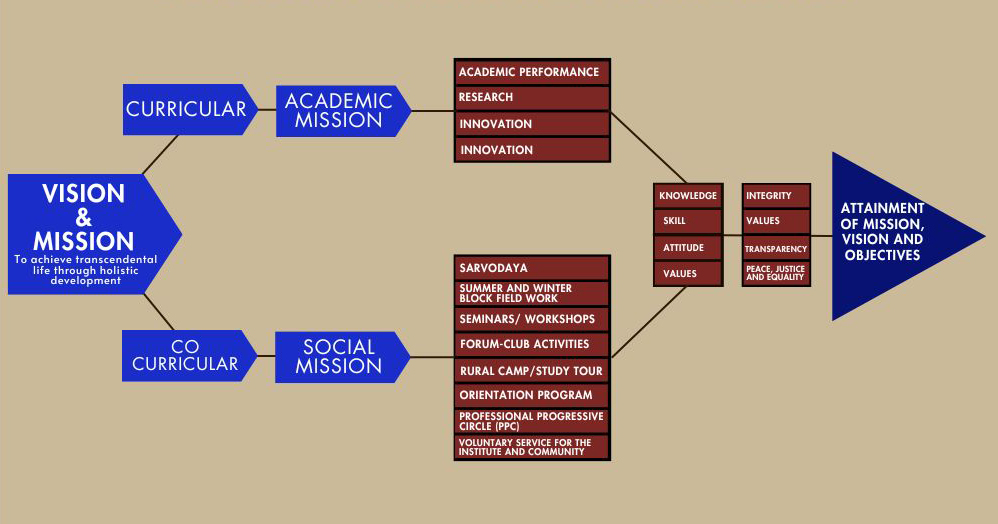
    The NEISSR has developed its own a unique model of assessing Course Outcomes (CO) and Programme Outcomes (PO). This model is known as NEISSR COPO MODEL addressing the academic and social mission of education. The IQAC along with the examination committee for Outcome Based Education has prepared the manual for assessment and calculation of attainment of Learning Outcomes. The Course Outcomes (CO) and Programme Outcomes (PO) are calculated using the appropriate metrics.

     The Course outcomes are 40 percentage by internal assessment and 60 percentage by external assessment. 
    1. Two Internal exam- Compulsory – two per semester. 
    2. One Internal exam – Compulsory (Following 8 parameters are used for (POs) and (COs) assessment). 

    In the context of Indian Higher Education, the NEISSR COPO MODEL represents a significant shift from conventional modes of assessment towards a more inclusive and comprehensive approach that acknowledges different forms of intelligence. This model also recognizes the existence of different intelligence quotients beyond just academic intelligence, such as emotional intelligence, social intelligence, Adversity intelligence and creative intelligence. By incorporating parameters that assess not only knowledge but also skills, attitudes, and values, the model provides a more holistic evaluation of students’ overall capabilities. Activities such as fieldwork, seminars, workshops, volunteer service, and participation in clubs and forums provide opportunities for students to showcase their talents, creativity, leadership skills, and social consciousness.

    Attainment Mapping 

    Percentage Attainment
    71-100% 03
    51- 70% 02
    1-50% 01
    0%  0

    COPO Assessment Framework

    Parameters

    Curricular (C)/ Curricular (EC)

    Activity

    Assessment

    Outcome

    Marks

    First Internal Exam

    C

    Written Exam

    Quantitative score

    Knowledge Assessment

    25

    Second Internal Exam

    C

    Written Exam

    Quantitative score

    Knowledge Assessment

    25


    Third Internal Exam


    EC

    1.Sarvodaya

    Attendance and participation

    Knowledge/ skill/ Attitude/ Values

    03

    2.Summer and winter block field work

    Attendance and Report

    Knowledge/ skill/ Attitude/ Values

    03

    3. Seminars/ workshops

    Attendance and Report

    Knowledge/ skill/ Attitude/ Values

    03

    4.Forum-Club activities

    Attendance, Team Work and Forum/Club Report

    Knowledge/ skill/ Attitude/ Values

    03

    5. Rural Camp/Study tour

    Attendance, Team Work and Report

    Knowledge/ skill/ Attitude/ Values

    03

    6. Orientation Program

    Attendance, Team Work and Report

    Knowledge/ skill/ Attitude/ Values

    03

    7.Professional Progressive Circle (PPC)

    Innovative and creative concept/incubation Report

    Societal problem solving, Participatory learning and Experiential learning

    03

    8.Voluntary Service for the institute and community

    Observation report submitted by the concerned faculty

    Knowledge/ skill/ Attitude/ Values

    04

    At the end of the semester, average of three internal examination is calculated

    Total

    25

    Assignment

    C

    Library/Book Review/case study/Class

    presentation

    Attendance and participation

    Knowledge Assessment

    10

    Attendance

    C

    Punctuality

    Attendance and participation

    Knowledge/Attitude/ Values

    05


    Total

    40

    The NEISSR COPO model stands as an innovation in the realm of academic assessment, changing conventional paradigms to a holistic and inclusive approach to education in the present scenario enhancing both academic and social mission of education. By integrating Course Outcomes (CO) and Program Outcomes (PO) with a balanced blend of internal and co-curricular activities, this model not only fosters a comprehensive understanding of students’ capabilities but also nurtures their holistic development. Thus, its success is indicated by improved student engagement, enriched learning experiences, and tangible progress in both academic and co-curricular domains.

    Best Practice II- Peace Lab

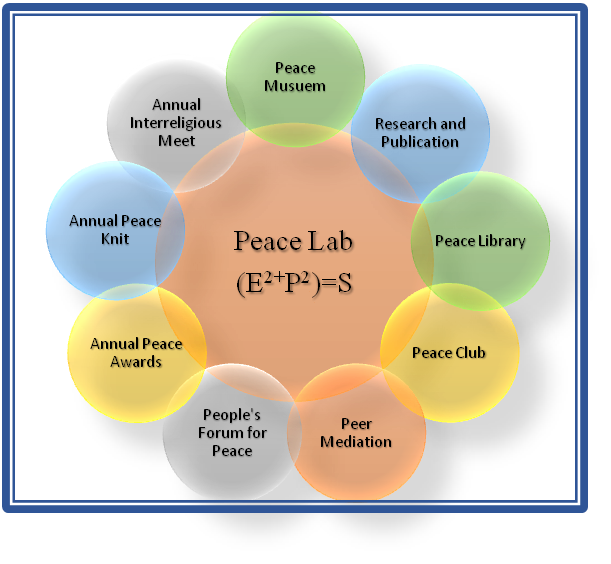
     The PEACE LAB at NEISSR is a dynamic ecosystem designed to foster innovation and incubate ideas that promote peace and sustainability. It is a collaborative and participatory learning platform where individuals, groups and community can engage in meaningful dialogue, develop skills, and work together to address complex social and environmental challenges with a particular focus on promoting peace, reconciliation and sustainable development. 

    The PEACE LAB includes the PEAR Methodology, a framework of procedures, techniques and tools used to accomplish tasks. PEAR stands for Planning, Execution, Assessment, and Remodeling, and it serves as the cornerstone of our learning practices of primary method of social work. The PCDA2 Peer Capacity Development Approach for Action refers to general strategy for addressing issues and achieving goals. (E2+P2)=S is a model refers to a structured framework of teaching- learning and innovation at NEISSR. This model provides teachers and learners a systematic approach to understanding, analyzing and improving or remodeling various aspects of learning process. The following components of Peace Lab are interlinked and interconnected creating a cohesive and effective learning environment.

    • Peer Mediation: Trained mediators facilitate constructive conversations and help resolve conflicts peacefully among the peers and other related peer issues.
    • Peace Club: A student-led clubs that promote peace through education, advocacy, and community engagement.
    • People’s Forum for Peace: A platform for open dialogue and exchange of ideas among diverse stakeholders like professionals, community and religious leaders.
    • Annual Peace Awards: Recognizing individuals and organizations that have made significant contributions to peace and sustainability in Nagaland and the region.
    • Annual Peace Knit: An inclusive community-building event that brings people of diverse groups and members of the Peace Movement together to foster a sense of unity.
    • Annual Interreligious Meet: It is a gathering of representatives from different faith traditions to promote understanding, cooperation and harmonious living.
    • Peace Museum: A space dedicated to preserving and celebrating the history and achievements of the peace movement.
    • Peace Library: A resource center with books, articles, and multimedia materials on peace studies and related topics.
    • Research and Publication: Conducting and disseminating research on peace, conflict and sustainability issues, contributing to the global knowledge base.

    Thus, these components create an inclusive ecosystem where people learn, collaborate, and innovate for a more peaceful and sustainable world.

    The two best practices identified, i.e. NEISSR’s COPO and Peace Lab models are aligned to the ideal of’ creating peaceful environment for effective learning. The COPO helps in capacitating the students with soft skills such as knowledge, critical thinking, public speaking and assertiveness, and Peace Lab employs theories and skills to solve conflicts and strives to build peaceful environment in the academic institution. Thus, both best practices strive to address the purpose of education namely, the academic and social mission.

  • ‘NAPSWI National Young Achievers Award 2022’

    Dr. Fr. C.P. Anto Conferred the ‘NAPSWI National Young Achievers Award 2022’

    Dr. Fr. C.P. Anto, Founder- Principal of NEISSR, and Founder-Director of Peace Channel, is awarded the ‘NAPSWI Young Achievers Award 2022’ on 15th of December 2022 at Ahmednagar, Maharashtra during the Xth Indian Social Work Congress.
    The event is jointly organized by National Association of Professional Social Workers in India (NAPSWI) and B.P.H.E Society’s C.S.R.D -Institute of Social Work and Research. This year event which commenced from 15th to 17th December 2022 is hosted by C.S.R.D -Institute of Social Work and Research, Ahemednagar, Maharashtra. The theme of this year is on ‘Green Social Work- Response to Climate Change and Environmental Issues’.
    The award was conferred for his contribution towards professional Social Work and in appreciation for initiating the first Social Work Institute in Nagaland and much more for introducing MSW in Peace and Conflict Transformation Studies, a context based course which is relevant to the state of Nagaland and the North East Region.
    In his acceptance speech, Dr. Fr. C.P. Anto said, “I dedicate this award to the people of Nagaland, especially to the innocent people who sacrificed their life for peace. He also thanked his Bishops, Priests, Brothers and Sisters of Diocese of Kohima, Nagaland, Sacred Heart College Tirupattur, my own family members, and my beloved Peace Channel and NEISSR fraternity”. He thanked Prof. Lanunungsang Ao his mentor, Nagaland University for their constant support and guidance, Prof. Suresh Pathare the Principal CSRD-ISWR, Ahmednagar, Maharashtra, and Prof. R.P. Dwivedi president NAPSWI in his response.
    The Indian Social Work Congress is an initiative of the National Association of Professional Social Workers in India (NAPSWI). Established in 2005, NAPSWI is a non-profit, non-political, national level organization dedicated to the promotion of standards and status of the social work profession. It has the largest member of professional social workers in the country.
    The purpose of organizing Indian Social Work Congress is to bring a fraternity of professional social workers from across the states of India to discuss and deliberate upon the issues related to social work profession, social work education, research, and practice in India as well as in other contexts.
    The NEISSR and Peace Channel family acknowledge and appreciate Dr. Fr. C.P. Anto for his tireless service to the people of Nagaland and the region in promoting social work activities and peace-building initiatives. We are proud of his achievement.
    NEISSR Desk

    https://www.facebook.com/photo.php?fbid=667119078448969&set=a.561960015631543&type=3&theater

  • Career

    Career

    Career Guidance Initiative at NEISSR

    The Career Guidance Initiative at NEISSR aims to empower students by providing comprehensive support and resources to help them make informed decisions about their academic and professional paths. This program is designed to foster personal and professional development; ensuring students are well-prepared for future challenges.

    Career Counseling Workshops are conducted regular workshops led by industry experts to guide students in exploring various career paths, understanding market trends, and identifying their strengths and interests. The implementation of skill development programs to enhance students’ practical abilities, equipping them with the necessary tools to succeed in their chosen fields. Facilitating partnerships with reputed organizations to offer internships, allowing students to gain hands-on experience and bridge the gap between academic knowledge and real-world application.

    Students will be equipped with the knowledge and tools to make informed decisions about their academic and professional pursuits. Through skill development and practical experience, students will enhance their employability and stand out in the competitive job market. Building strong connections with industry professionals will open up networking opportunities, increasing the likelihood of securing internships and job placements.

    The initiative aims to contribute to the holistic development of students, fostering not only academic excellence but also personal growth and resilience. NEISSR’s Carrier Guidance Initiative is committed to nurturing a generation of well-prepared and confident individuals ready to contribute meaningfully to their chosen fields.

  • IQAC

    The Internal Quality Assurance Cell (IQAC) at NEISSR (Nagaland Educational Institute of Social and Scientific Research) is a vital entity dedicated to upholding and enhancing the quality of education and overall institutional excellence. IQAC serves as a pivotal coordinating agency responsible for various quality assurance activities within NEISSR. Operating under the guidelines of the National Assessment and Accreditation Council (NAAC), IQAC aims to foster a culture of quality and systematically assess and monitor the institution’s functioning. Its core objective is to identify areas for improvement, implement necessary measures, and develop a quality culture across NEISSR.

    Comprising a team of experienced professionals, including faculty members, administrative staff, and external experts, NEISSR’s IQAC works collaboratively to create a learner-centric environment that promotes innovation, research, and academic excellence. It ensures the implementation of quality benchmarks, best practices, and policies, encouraging effective teaching and learning methodologies.

    IQAC conducts regular assessments, aligns academic programs with societal and industry needs, and emphasizes outcome-based education. It emphasizes the development of essential skills, knowledge, and ethical values among students, preparing them for future careers.

    Objectives: 

    The primary objective of NEISSR’s IQAC department is to ensure and enhance the quality of education and overall institutional excellence. The IQAC aims to:

    Develop a quality culture: Foster a culture of continuous improvement, accountability, and academic integrity throughout NEISSR.
    Coordinate quality assurance activities: Act as a nodal agency to coordinate and oversee various quality assurance activities within the institution.
    Assess and monitor institutional functioning: Systematically assess and monitor different aspects of NEISSR’s functioning to identify areas for improvement.
    Implement necessary measures: Take necessary measures to enhance academic and administrative processes, aligning them with the changing needs of society and industries.
    Promote effective teaching and learning: Encourage the implementation of best practices, innovative teaching methodologies, and outcome-based education to ensure effective teaching and learning experiences.
    Facilitate faculty development: Organize workshops, training sessions, and other initiatives to enhance the professional development of faculty members.
    Conduct internal and external audits: Facilitate internal and external academic audits to evaluate and improve the quality of programs and services offered by NEISSR.
    Support research and publication activities: Encourage and support research endeavors among faculty and students, promoting a culture of scholarly contributions.
    Foster holistic student development: Emphasize the development of essential skills, knowledge, and ethical values among students to prepare them for future careers and societal contributions.

    Overall, NEISSR’s IQAC department aims to create a quality-oriented environment, ensure academic excellence, and continuously enhance the overall educational experience for students at the institution.

    Functions:

    The IQAC department at NEISSR performs several key functions to ensure and enhance the quality of education and institutional excellence. The functions of NEISSR’s IQAC department include:

    Development and implementation of quality benchmarks: Establishing quality benchmarks and guidelines for various academic and administrative processes within NEISSR.
    Institutional planning and performance evaluation: Facilitating the development and implementation of institutional plans, including strategic plans, academic calendars, and performance indicators.
    Quality assurance reviews: Conducting regular internal reviews and evaluations of academic programs, curriculum design, teaching-learning processes, and support services to ensure adherence to quality standards.
    Promotion of best practices: Identifying and promoting best practices in teaching, learning, and assessment methods, as well as administrative and governance practices.
    Faculty development programs: Organizing workshops, seminars, and training sessions to enhance the professional development of faculty members, promoting effective teaching methodologies and research skills.
    Student support and feedback mechanisms: Developing mechanisms to gather feedback from students regarding the quality of education, support services, and overall learning experience. Using this feedback to improve student support systems.
    Internal and external quality audits: Facilitating internal and external quality audits and assessments to evaluate the effectiveness of various academic and administrative processes, ensuring compliance with quality standards.
    Curriculum development and revision: Collaborating with faculty members to design and revise curricula to meet the evolving needs of industries and society, incorporating interdisciplinary approaches and experiential learning opportunities.
    Research and publication promotion: Encouraging and supporting faculty and student research activities, promoting a research culture within NEISSR, and facilitating the publication of research outcomes.
    Collaboration and networking: Establishing collaborations with other institutions, industry partners, and stakeholders to share best practices, engage in academic partnerships, and foster continuous improvement.

    These functions collectively contribute to the overall enhancement of quality in education, academic processes, and institutional effectiveness at NEISSR.

  • Students Corner

    Students Corner

    Students’  Report

    2015-2017 Batch
  • Inaugural Function of Peace Centre

    An Inaugural Programme for Peace Centre (NEISSR & Peace Channel) was held on 5th of August, 2022 at Peace Centre, Chúmoukedima. The Inaugural programme for Peace Centre started with a National Anthem followed by a word of blessing for the Peace Centre by Most Rev. Dr. James Thoppil, Bishop of Kohima, invocatory prayer by Rev. Fr. Chacko Karithayal, Director of Rehabilitation Center, Chumoukedima and the lighting of the Harmony lamp by the Inter-Religious Leaders.

    Dr. Fr. C.P Anto, Principal of NEISSR and Director of Peace Channel delivered his welcome address by acknowledging and welcoming the dignitaries, Bishops, Sisters, religious leaders, civil society leaders, academicians, Alumni, faculty and the students present in the programme. He said that it was a dream for the Catholic Churches to have a Peace Centre in Nagaland and now we are able to relieve those dreams because of the continuous and tremendous support and efforts of the people present in the programme. He concluded by stating that NEISSR will be a unique institute in the days to come and should stand out in mainstreaming peace building through Morungs and methods that promotes our rich culture. Likewise, NEISSR will train students to be peace promoters and stress more on skilling, job oriented and academic excellence.

    A message was delivered by the chairman, Most Rev. Dr. James Thoppil, Bishop of Kohima Nagaland where he highlighted on the importance and role of Peace Centre with its two wings NEISSR and Peace Channel. The centre would promote peace and harmony, dissemination of knowledge through seminars, workshops, and outreach programmes. He encouraged everyone to support Peace Education and promotes Peace in the society. He stated that “Peace is a gift of God” and lack of peace will affect the entire society.

    Thereafter, a special song was presented by Ms. Tinailu followed by Felicitation to Shri. Jamal Siddiqqui, National President of Minority Front BJP, Peace Activist; Most Rev. Thomas Menamparampil, SDB, Archbishop Emeritus, Archdiocese of Guwahati; Rev. Fr. Benny Varghese, President Diocesan Fraternity; Most Rev. Paul Mattekat, Bishop of Diphu, Assam; Prof. D. Gnanadurai (VC), Nagaland University; Rev. Dr. Zelhou Keyho, General Secretary, Nagaland Baptist Council of Churches (NBCC); Mr. Johnny Ruangmei, Present CAN, Joint CEO NSDMA, Home Dept., Govt. of Nagaland; Mr. James Mattam, Chief Executive Officer Vedic IAS Academy, Bangalore.

    Guest of honor, Prof. Pardeshi Lal, Honorable Vice Chancellor of Nagaland University in his message expressed his gratitude to Dr. Fr. C. P. Anto and his team for undergoing continuous struggle to advocate for peace which has now come to a success in the form of a Peace Centre. He then stated that he visualizes Peace Centre to be a mission that is going to have its impact undiluted in the society in the future duration. And its significance will go on gaining more and more impact on the society where people capacitated and empowered to come forward for conflict resolution and to make peace in the society. In time to come through Peace Centre many young talents is going to be trained into an able leader who will help built a sense of “Sarva Dharma Sambhav” (equal respect for all regions) in the society and the whole world as a family called “Vasudhaiva”.

    Following was the official launching of the Civil service training – Vedic Academy by Mr. James Mattam representing Vedic IAS Academy, Bangalore. During the launching, Mr. James Mattam stated that civil servants are the servants of the society, they do social service of the society. This being first time associating with the social service institute it is a unique opportunity to promote the best and dedicated civil servant for the country from the social sector. A civil servant should be a server with the capacity of all social services, hence, NEISSR students are eligible to serve the country in that perspective. In conclusion he motivated the NEISSR students to build the capacity, knowledge and skills required to be a civil servant and rescue the country.

    Prof. Stephen P. Marks, Dean of School of Public Health and Human Development, O. P. Jindal University, Haryana was the chief guest for the occasion. Addressing the audience, Prof. Stephen stated that the creation of this Peace Centre is very special because there are very special needs in the northeast region. It is a region that has known conflict & that continues to know conflict, and is struggling to find its way towards peace and in doing so it is addressing the special needs of the indigenous people.

    The establishment of peace centre among community that identify as indigenous people has not only an enriching feature to making this Peace Center successful in the region but also demonstrating to the world that what we have known for generation and failed to attain, it is the indigenous Knowledge that would have saved us from the climate catastrophe we are facing today. So the Peace center that draws among the wisdom and respect for the indigenous rights of the people is also a centre that can be a leader in introducing peace and responses to climate catastrophe that we are facing. This is an opportunity to draw upon the indigenous knowledge, to draw upon a lessons learn from the conflicts in the region and to train people of all ages, of all religion on how to work towards conflict transformation. This centre can also not only work with youth by training them to be individually committed to building peace but also help develop professionally through the civil service training.

    In conclusion he expressed his interest in the continuation of the networking and of future collaboration between O. P. Jindal University and Peace Centre.

    The inauguration concluded with vote of thanks delivered by Rev. Fr. Kokto Kurian, V. P. & Administrator, NEISSR following the benediction by Rev. Fr. Carlos Neisalhou Kuotsu (Vicar General)