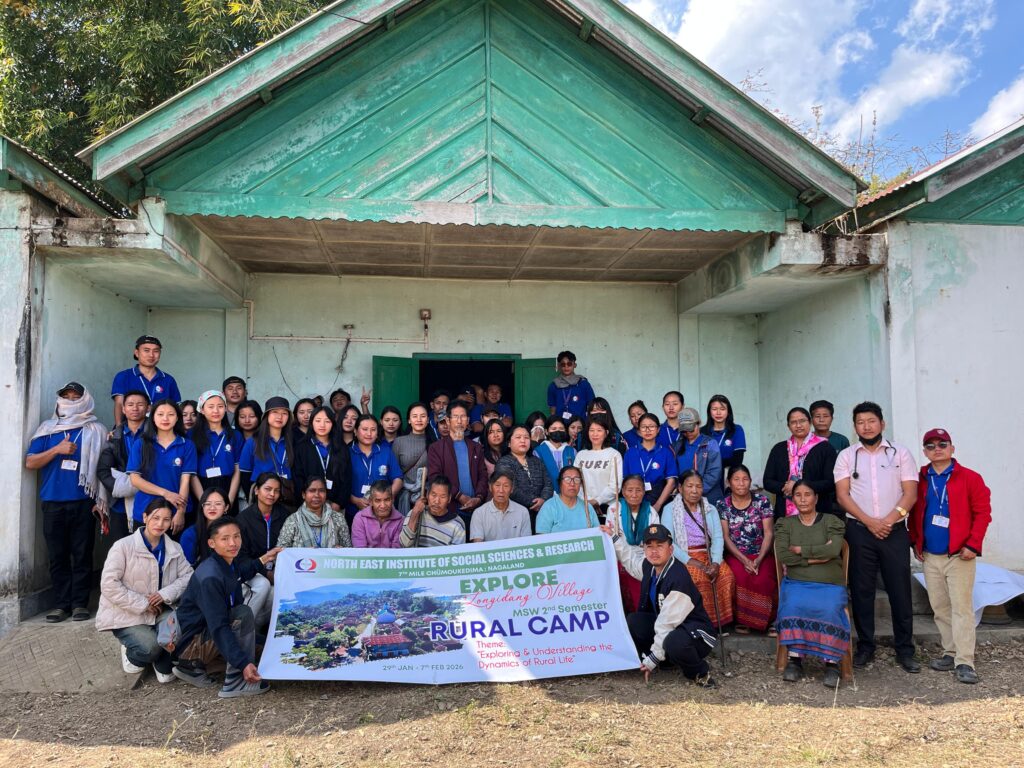
The Master of Social Work (MSW) second semester trainees of the North East Institute of Social Sciences and Research (NEISSR), Chümoukedima, successfully organized and conducted a ten-day Rural Camp at N. Longidang Village under Wokha District, Nagaland, from 29 January to 7 February 2026. The Rural Camp forms an integral component of the MSW curriculum and is designed to bridge classroom learning with real-life community practice through direct field exposure.
The primary objective of the camp was to familiarize students with rural life, community structures, local governance systems, and participatory development processes. Through sustained interaction with the villagers, the trainees gained firsthand understanding of grassroots realities while applying social work theories and methods in a practical setting. Participatory Rural Appraisal (PRA) techniques were extensively used to assess the social, economic, and environmental conditions of the village.
During the camp, the trainees actively engaged in various PRA tools, household surveys, transect walks, and community analysis using locally available materials. These activities enabled the trainees to identify community needs, resources, and challenges in collaboration with the villagers. The camp also emphasized environmental responsibility through cleanliness drives, installation of bamboo dustbins, and awareness programmes on proper waste management practices.
Several community-oriented programmes were organized as part of the camp. A Health Camp and the observance of World Cancer Day were conducted in collaboration with the Village Primary Health Centre, providing basic health check-ups and health awareness for the villagers. Social awareness was further promoted through street plays on themes such as parenting styles and unemployment, encouraging dialogue and reflection within the community. Sports and recreational activities were organized for children and youth, fostering interaction, cooperation, and community bonding.
Cultural and social exchange formed an important component of the camp experience. The trainees participated in church services and youth fellowship programmes, and organized a cultural evening showcasing performances that strengthened mutual understanding and appreciation between the students and the local community. Interactive sessions with village leaders provided valuable insights into local governance, leadership structures, and development priorities.
The camp concluded with a thanksgiving and valedictory programme, expressing gratitude to the village authorities and residents for their warm hospitality, cooperation, and support throughout the duration of the camp. A final evaluation session reflected on the learning outcomes and overall experiences gained during the rural exposure.
The Rural Camp at N. Longidang Village proved to be a meaningful and enriching experience for the MSW trainees. It significantly contributed to the development of the trainees’ professional competencies, leadership qualities, teamwork, and sense of social responsibility. The camp successfully fulfilled its objectives by fostering experiential learning and strengthening the trainees’ commitment to community-centered and participatory social work practice.
https://morungexpress.com/neissr-conducts-rural-camp-at-n-longidang-village