Category: Events

  • FROM ROTE TO SKILLS, NEISSR LEADS THE WAY: NU INSPECTION TEAM

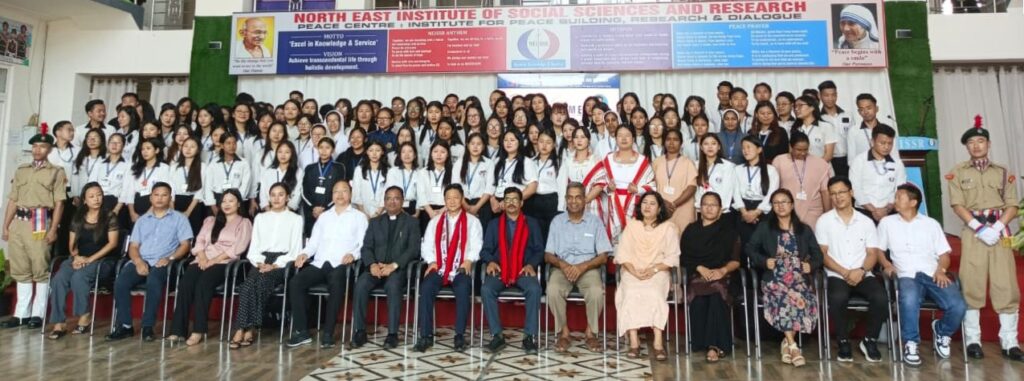
    North East Institute of Social Sciences and Research (NEISSR), Chümoukedima organized a formal programme at BAM Hall during the official inspection visit of a team from Nagaland University, Lumami. The inspection team comprised Prof. Temjensosang of the Department of Sociology and Dr. Arjun Das of the Department of Mass Communication. The programme highlighted the institute’s academic achievements, vision, and future expansion plans.

    The programme commenced with a welcome address by Dr. Fr. C.P. Anto, Principal of NEISSR, who presented the institute as a pioneering centre for peacebuilding and social work education since 2014. He emphasized NEISSR’s unique integration of academic excellence with community engagement, research, and skill development, and highlighted the consistent success of its students in national-level examinations. Outlining a forward-looking vision aligned with the National Education Policy 2020, he announced the expansion of the BSW programme into a four-year course and the introduction of a Bachelor’s degree in Journalism and Mass Communication, reaffirming the institute’s commitment to nurturing skilled, ethical, and socially responsible professionals.

    Prof. Temjensosang appreciated NEISSR’s role in promoting peace and shaping young minds. Emphasizing the transformative vision of the National Education Policy 2020, he highlighted the shift from rote learning to skill-oriented education—an approach that NEISSR had already embraced well before the policy’s introduction. He called for greater youth empowerment through the discovery and nurturing of talents, stressing that individuals are shaped by values and influences rather than their origins. He encouraged students to engage in self-reflection and continuous skill development as the foundation for progress and holistic growth.

    Dr. Arjun Das expressed gratitude for the warm hospitality extended during the visit. He remarked that while inspections assess infrastructure and systems, it is the vision and mindset of an institution that truly determines its success. He observed that NEISSR’s clarity of purpose and commitment places it ahead of many institutions. Speaking on the proposed Journalism and Mass Communication programme, he highlighted the urgent need for ethical and responsible media professionals in an era marked by misinformation and declining trust in mainstream media. He encouraged students to pursue the course with purpose and emphasized its interdisciplinary scope, opening pathways across diverse fields including economics, sociology, history, politics, and management.

    The programme began with an invocation by Rev. Fr. Chacko Karinthayil, Governing Board Member of NEISSR, invoking God’s blessings. A presentation highlighting NEISSR’s achievements and activities was delivered by Ms. Nlumpeule, Assistant Professor, who also chaired the programme. Adding cultural vibrancy to the occasion, Ms. Bilu Lohe and Ms. Vishili Sakhamo presented a Chokri folk song, celebrating the rich heritage of Naga culture.

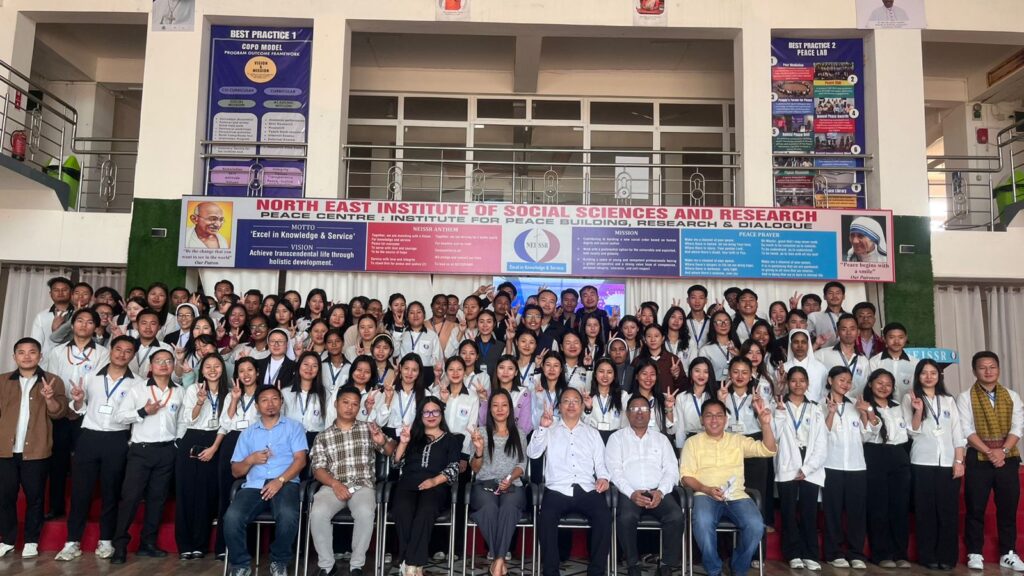
    The programme concluded with a vote of thanks delivered by Rev. Fr. G.L. Khing, Vice Principal and Administrator, expressing gratitude to the inspection team and all participants. The session ended with the National Anthem followed by a group photo session.

    The successful conduct of the programme alongside the inspection visit marks a significant step forward for NEISSR in its journey toward academic excellence, innovation, and societal impact.

    https://morungexpress.com/neissr-hosts-nagaland-university-inspection-team-outlines-expansion-plans

  • NEISSR HONOURS PROF. A. LANUNUNGASANG AO THROUGH MEMORIAL LECTURE 2026

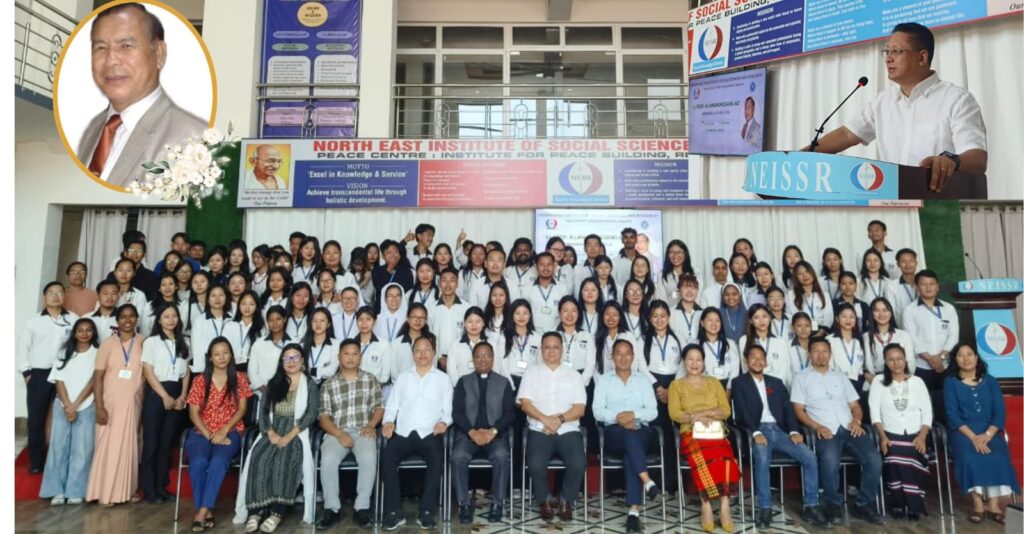
    In a solemn yet inspiring gathering that paid tribute to the life, vision, and enduring intellectual legacy of one of Nagaland’s most distinguished academicians, the North East Institute of Social Sciences and Research (NEISSR), Peace Centre, 7th Mile, successfully organized the Prof. A. LanunungsangAo Memorial Lecture 2026 on 13th April 2026 at 10:00 AM. The event brought together academicians, students, dignitaries, and members of the family of Late Prof. A. LanunungsangAo to honour his remarkable contributions to education, scholarship, peace-building, and social transformation.

    The programme was graced by Shri Apok Jamir, Working President of the Nagaland Pradesh Congress Committee and former Member of Parliament, MLA, and Minister, Government of Nagaland, who served as the Special Guest and delivered the Memorial Lecture.

    The programme commenced with an invocation by Rev. Fr. G. L. Khing, Vice-Principal, NEISSR, invoking blessings for the success of the event. The welcome address was delivered by Dr. Fr. C. P. Anto, Principal, who warmly welcomed the Chief Guest, members of the family, faculty, students, and distinguished guests, and paid rich tribute to A. LanunungsangAo, describing him as a visionary teacher, scholar, and institution builder whose legacy continues to guide NEISSR. He highlighted Prof. Ao’s lifelong dedication to teaching, research, academic writing, mentorship, and his pivotal role in the establishment and growth of the institution.

    Delivering the Memorial Lecture, Shri Apok Jamir described Late Prof. Ao as a “teacher of conscience” who inspired generations to think critically and act responsibly. He spoke about the growing challenge of fear psychosis in society and urged the youth to overcome fear and uphold truth with courage and integrity, emphasizing that democracy thrives only when freedom of expression is protected.

    He further reflected on Prof. Ao’s intellectual ideas, highlighting the “bullet and currency” challenges, where violence destroys life while overdependence on money weakens dignity and self-reliance. Stressing the importance of economic sovereignty alongside political sovereignty, he called for responsible citizenship rooted in values.

    He elaborated on the concept of active peace, emphasizing that peace must go beyond the absence of conflict and be built through understanding, reconciliation, and collective social responsibility. He also urged students to apply their education to address pressing issues such as water scarcity in Kohima, unemployment in Dimapur, and environmental degradation in Nagaland.

    Encouraging the youth, he emphasized the importance of balancing rooted identity with global knowledge and stated that “excellence is the highest form of patriotism.” He concluded by reminding students that education is a transformative tool and urged them to carry forward Prof. Ao’s legacy through meaningful action.

    A heartfelt message on behalf of the family was delivered by Mr. Merenkokba M. Walling, who reflected on Prof. Ao’s life as a loving father and grandfather and highlighted his enduring values of peace, research, and dialogue.

    The programme was chaired by Dr. Lily Sangpuii, Assistant Professor, NEISSR. The biography of Prof. Ao was presented by Mr. VizosuKikhi, Assistant Professor, NEISSR. The vote of thanks was delivered by Rev. Fr. G. L. Khing, Vice Principal.

    The programme concluded with a renewed commitment from all participants to uphold the legacy of Late Prof. A. LanunungsangAo by fostering education, peace-building, and social transformation.

    https://morungexpress.com/neissr-honours-prof-lanunungsang-ao-at-memorial-lecture-2026

  • NEISSR Trainees Equipped with Disaster Preparedness Skills

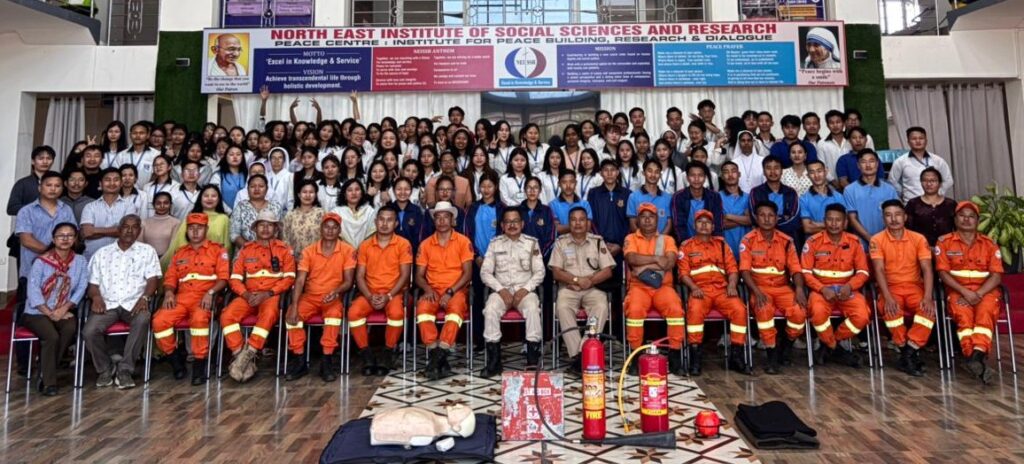
    North East Institute of Social Sciences and Research (NEISSR) successfully conducted a Capacity Building and Training Program on Disaster Preparedness on 7th April 2026 at BAM Hall. The programme was collaboratively organized in partnership with the Home Guards, Civil Defence and State Disaster Response Force (SDRF), and the Community Development Forum, NEISSR, with the objective of strengthening awareness and practical response skills among participants.

    The programme began with an evacuation exercise simulating an earthquake scenario, enabling participants to practice safe and timely evacuation procedures in a controlled environment.

    The technical sessions formed the core of the programme. Mr. Kangkang, Sub-Inspector, highlighted the existing gap in disaster awareness and noted that lack of preparedness often leads to panic during emergencies. He informed that around 360 volunteers have been trained so far and emphasized that disaster preparedness is essential not only during crises but also in everyday life. Mr. Angukato, Assistant Sub-Inspector, stressed the importance of mock drills and maintaining calmness during disasters, noting that many casualties occur due to panic rather than the disaster itself. He also highlighted the importance of first aid and CPR in saving lives during emergencies.

    The programme included practical, skill-based sessions on Cardiopulmonary Resuscitation (CPR) and Emergency Medical Response (EMR), focusing on timely intervention, stabilization of victims, and prevention of further injury. A demonstration on bandaging techniques was conducted by Mr. Lanutemsu H/LNK, covering various methods such as jaw, chest, arm slings, neck, capeline, finger, and spiral bandages.

    A session on fire safety and management was also conducted, explaining the fire triangle – fuel, heat, and oxygen—and different types of fire extinguishers, including water, foam, dry chemical powder (DCP), and CO₂. Participants were trained in the PASS technique (Pull, Aim, Squeeze, Sweep) and engaged in a live demonstration on the use of fire extinguishers.

    The programme commenced with formal moderation by Ms. Kili Awomi. Earlier, the programme began with a welcome address delivered by Rev. Fr. G.L. Khing, Vice Principal and Administrator of NEISSR, who briefly emphasized the importance of disaster preparedness and highlighting the institute’s focus on integrating theoretical learning with practical-based experience.

    The programme concluded with a vote of thanks delivered by Dr. Toli H. Kiba, Head of Department, Social Work, NEISSR, who expressed gratitude to all collaborating agency, resource persons, and participants for their active involvement and contribution to the success of the training programme.

    https://www.easternmirrornagaland.com/neissr-equips-trainees-with-disaster-preparedness-skills

  • Free Oral Screening Camp Strengthens the Fight Against Tobacco

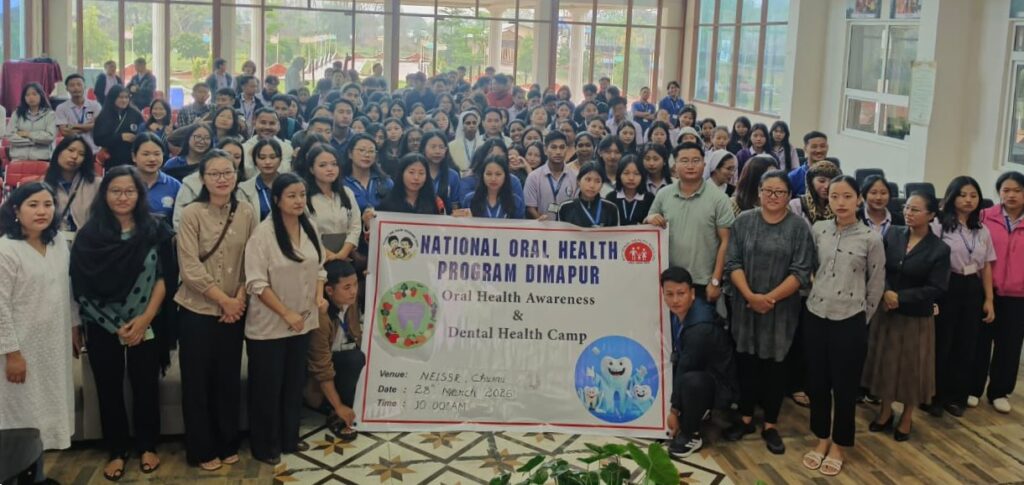
    In a significant step towards promoting preventive healthcare and raising awareness on tobacco-related risks, a Free Oral Health Screening Camp was successfully conducted on 28th March 2026 at North East Institute of Social Sciences and Research (NEISSR). The initiative brought together students, health professionals, and other stakeholders, reflecting a collective commitment to building a healthier and tobacco-free society.

    The programme was organized by Community Development (CD) Specialization, NEISSR in collaboration with the District Tobacco Control Cell (DTCC), Dimapur. It aimed not only to create awareness on the harmful effects of tobacco but also to provide practical exposure through oral health screening and professional consultation.

    Ms. Imkumla Aier, Psychologist, DTCC Dimapur, served as the Resource Person. In her address, she highlighted tobacco consumption as a major public health concern, noting that globally one person dies every six seconds due to tobacco-related diseases, while in India approximately 3,500 deaths occur daily. She emphasized that tobacco is a leading cause of oral cancer, contributing to nearly 85% of head and neck cancer cases, and expressed concern over the high prevalence of smokeless tobacco use, particularly among youth.

    She further elaborated on the wide-ranging health impacts of tobacco, including its link to cancers of the esophagus and stomach, cardiovascular diseases such as heart attacks and stroke, and its harmful effects on oral health. The risks associated with first-hand, second-hand, and third-hand smoke were also underscored, especially their impact on children and non-smokers. Additionally, she highlighted its adverse effects on reproductive health and its association with conditions such as Type 2 diabetes and weakened bones.

    Addressing the socio-economic dimension, she pointed out that tobacco use often leads to financial strain on families. She also discussed emerging challenges in tobacco control, including attractive packaging, flavoured products, and indirect promotion targeting young people, despite regulatory measures.

    The session included an overview of the legal framework under the Cigarettes and Other Tobacco Products Act (COTPA), 2003, and the National Tobacco Control Programme (NTCP), which focus on awareness generation and enforcement. Practical strategies for quitting tobacco were shared, including setting a quit date, avoiding triggers, seeking professional support, and using nicotine replacement therapies. Information on tobacco cessation services and the National Tobacco Quitline (1800-112-356) was also provided.

    The programme commenced with a welcome address by Dr. Toli H. Kiba, Head of the Department of Social Work, NEISSR. The session was moderated by Ms. Atheli Hollohon, and the vote of thanks was delivered by Mr. Lumgaiguong.

    Following the awareness session, a free oral health screening camp was conducted by dental surgeons from District Hospital Dimapur—Dr. Japhet, Dr. Sophia, and Dr. Lele—who provided screening and expert guidance to participants. Ms. Medo, Social Worker at DTCC Dimapur, also contributed to the programme.

    The initiative successfully combined awareness with action, encouraging informed choices and reinforcing the importance of preventive healthcare and a tobacco-free lifestyle.

    https://www.easternmirrornagaland.com/oral-health-screening-camp-conducted-at-neissr-in-chmoukedima

  • ASSPIRE teachers workshop held in Chumoukedima

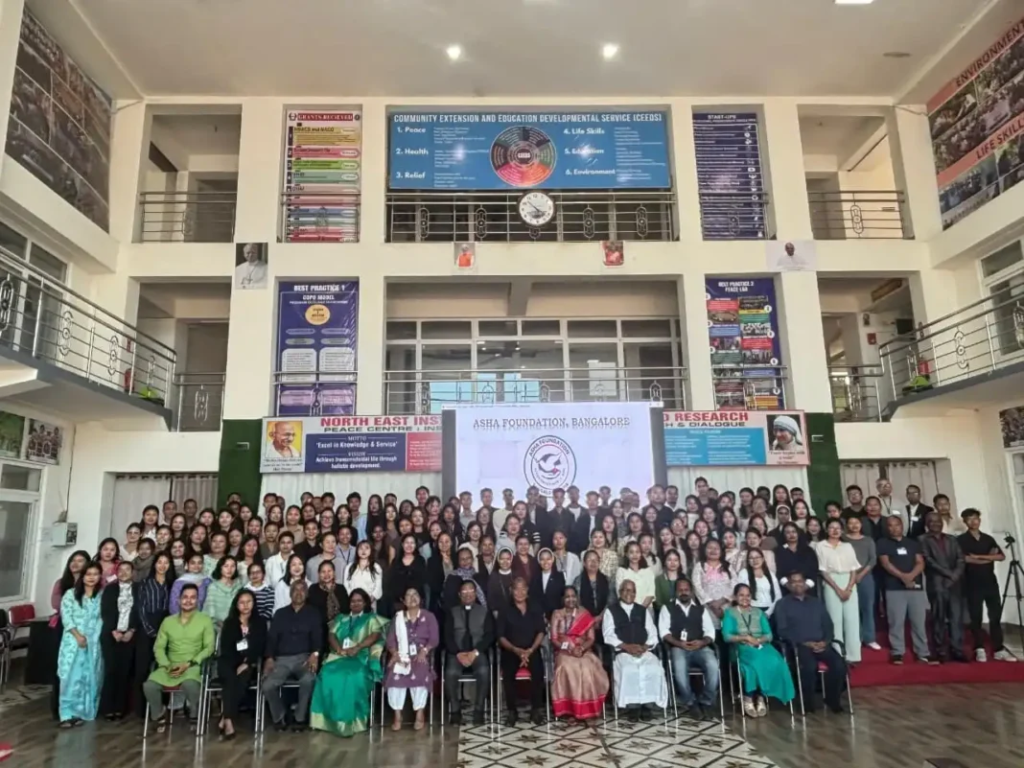
    The 101st ASSPIRE teachers training workshop on ‘Advancing Skills for Professional and Peaceful Instruction with Reflective Education’ commenced at the Peace Centre, 7th Mile, Chumoukedima on March 20. The three-day programme was organized by Peace Channel in collaboration with ASHA Foundation, CEDOK, and the North East Institute of Social Sciences and Research (NEISSR).
    A press release by Peace channel and NEISSR Desk Chumukedima, stated that the workshop brought together 140 participants from 42 schools, focusing on strengthening professional competencies, fostering reflective practices, and promoting peaceful, inclusive learning environments. It focused on emphasized communication, classroom management, self-awareness, student engagement, and value-based education.
    In his address, chief guest, district education officer of Chumoukedima, John Lotha, emphasized the importance of peacebuilding, leadership, and adaptability in today’s educational landscape. He called upon teachers to cultivate self-awareness, mutual respect, and a spirit of continuous learning, describing them as the backbone of the education system and key agents in shaping a responsible and harmonious society.
    The programme also acknowledged the presence of founder and director of ASHA Foundation, Dr. Glory Alexander, and member of the governing board, Rev. Fr. Mathew Thuniambral.
    Sessions are being facilitated by resource persons including Hazel Leena George, Bethesa Jacob, Prof. Biju Sebastian, Maya Singh, and Jose V Abraham. It was the 77th training programme for the ASHA.
    Highlighting Peace Channel’s renewed outreach, Rev. Dr. Anto announced an initiative to send trained educators to schools for 30 to 45 days to support teachers and strengthen school systems through life skills education, peace education, and career guidance.
    He also noted that NEISSR, as a pioneering institution in the region, continues to contribute to professional education in social work and journalism while developing innovative models for peacebuilding.
    Peace Channel and NEISSR, together with ASHA Foundation, are also planning to host similar programmes in other districts, expanding the reach of reflective and peace-oriented education initiatives.
    The first day featured interactive sessions on self-awareness, communication skills, adolescence, classroom management, and inclusive education.
    The welcome address was delivered by NEISSR founder-principal and founder-director of Peace Channel, Rev. Dr. Fr. C. P. Anto.

  • District-Level Viksit Bharat Youth Parliament

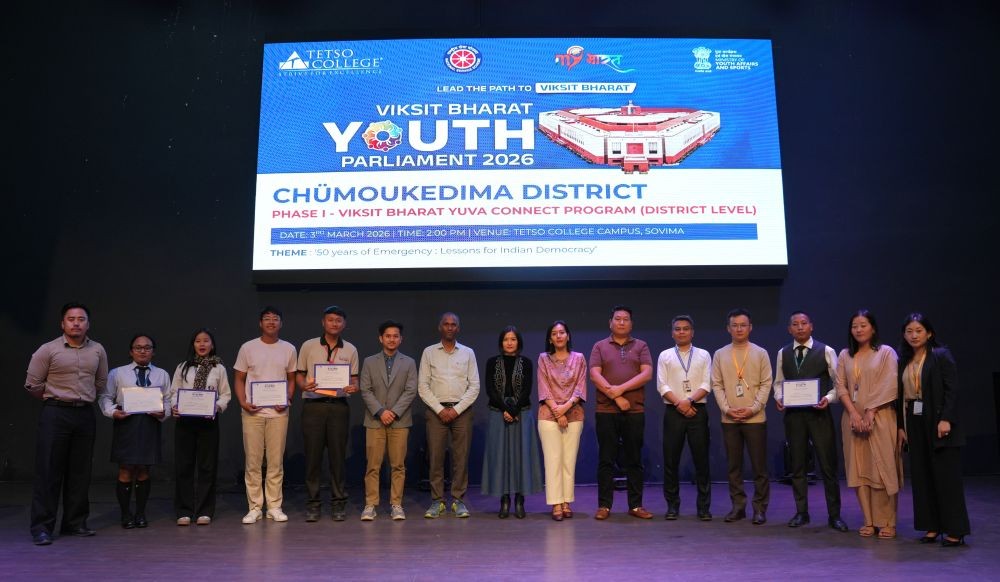
    The District-Level Viksit Bharat Youth Parliament, held under Phase I of the Viksit Bharat Yuva Connect Programme, was organised at Lorin Hall, Tetso College, Sovima, on March 3.

    The programme was organised by Tetso College in collaboration with the National Service Scheme and MY Bharat under the Ministry of Youth Affairs and Sports.

    Dr Hewasa L Khing, Principal of Tetso College, delivered the welcome address, while the event was graced by District Youth Officer MY Bharat K. Manikanta and Chairman of the Nagaland Industrial Development Corporation, Kvulo Lorin.

    Held on the theme “50 Years of Emergency: Lessons for Indian Democracy,” the competition saw participation from institutions across Chümoukedima district. 

    Khrieketouzo Peter Sekhose of NIT Nagaland secured first place, followed by Mholomi of Tetso College and Kereineilie John of ICFAI University Nagaland. Neiketouno Thapo of North Eastern Institute of Social Sciences and Research and Kiumuhean H of Tetso College jointly secured fourth place.

    All five winners will represent Chümoukedima district at the state-level Youth Parliament competition.

    Participants from NEISSR:

    1. Ms. Neiketouno Thapo BSW
    2. Mr. Nikaho Yeptho BSW
    3. Mr. Mhasileto Phinyo MSW
    4. Ms. Melda BSW
  • NEISSR Commemorates World Peace and Understanding Day 2026

    The North East Institute of Social Sciences and Research (NEISSR) commemorated World Peace and Understanding Day on 23rd February 2026 under the theme “Embracing Diversity, Cultivating Peace for All.” The program sought to foster awareness on the significance of unity, empathy, and global cooperation in nurturing a peaceful and inclusive society.

    World Peace and Understanding Day is historically linked to Rotary International and marks its first meeting held on 23rd February 1905 by founder Paul Harris. The day highlights the enduring values of friendship, service, and mutual understanding as foundations for sustainable peace.

    As part of the programme, a documentary was screened to deepen the understanding of global harmony and the shared responsibility of individuals in promoting peace. The screening was followed by reflective engagement, encouraging students to critically examine the role of social work in addressing conflict, inequality, and social divisions within communities.

    Mr. Barnic Gangmei, Assistant Professor NEISSR, delivered a thought provoking message emphasizing that peace begins with understanding. He emphasized the importance of empathetic listening, respect for diversity, and constructive dialogue in preventing conflict. He further encouraged students to act as ambassadors of peace by practicing inclusion, cooperation, and responsible citizenship in their daily interactions.

    The program concluded with a collective affirmation by students and faculty to embrace diversity, strengthen unity, and contribute actively towards building a just, compassionate, and harmonious society.

  • MSW Trainees from Tezpur University Visit NEISSR for Academic Interaction


    Master of Social Work (MSW) trainees from the Department of Social Work, Tezpur University, Assam, visited the North East Institute of Social Sciences and Research (NEISSR), CHumoukedima, Nagaland on 16 February 2026 as part of their rural camp. The visit aimed to promote academic exchange, professional interaction, and inter-institutional collaboration among social work trainees in the North East region.

    The visiting delegation was led by Dr. Samhita Barooah, Assistant Professor, Department of Social Work, Tezpur University. The trainees were formally received and participated in an interactive session with MSW trainees of NEISSR. During the interaction, trainees from both institutions shared experiences from their fieldwork, discussed community engagement strategies, and reflected on contemporary issues in social work practice. An institutional overview of NEISSR, its academic programmes, and fieldwork model was presented by Dr. Toli H. Kiba, Assistant Professor, NEISSR, along with Dr. Fr. C. P. Anto, Principal, NEISSR. The talks highlighted the institute’s commitment to practice-oriented training and collaborative academic engagement.

    Both institutions expressed a shared interest in fostering future partnerships through joint academic initiatives, exposure visits, research collaboration, and student exchange programmes. The visit concluded with a collective call to strengthen institutional linkages and promote sustained cooperation for the advancement of social work education and community-based practice in the region.

    https://easternmirrornagaland.com/tezpur-university-msw-trainees-visit-neissr-chmoukedima#:~:text=The%20visit%20aimed%20to%20promote,of%20Social%20Work%2C%20Tezpur%20University.

    https://morungexpress.com/tezpur-university-msw-trainees-engage-in-academic-exchange-at-neissr

  • MSW trainees of NEISSR Conduct Ten-Day Rural Camp at N. Longidang Village

    The Master of Social Work (MSW) second semester trainees of the North East Institute of Social Sciences and Research (NEISSR), Chümoukedima, successfully organized and conducted a ten-day Rural Camp at N. Longidang Village under Wokha District, Nagaland, from 29 January to 7 February 2026. The Rural Camp forms an integral component of the MSW curriculum and is designed to bridge classroom learning with real-life community practice through direct field exposure.

    The primary objective of the camp was to familiarize students with rural life, community structures, local governance systems, and participatory development processes. Through sustained interaction with the villagers, the trainees gained firsthand understanding of grassroots realities while applying social work theories and methods in a practical setting. Participatory Rural Appraisal (PRA) techniques were extensively used to assess the social, economic, and environmental conditions of the village.

    During the camp, the trainees actively engaged in various PRA tools, household surveys, transect walks, and community analysis using locally available materials. These activities enabled the trainees to identify community needs, resources, and challenges in collaboration with the villagers. The camp also emphasized environmental responsibility through cleanliness drives, installation of bamboo dustbins, and awareness programmes on proper waste management practices.

    Several community-oriented programmes were organized as part of the camp. A Health Camp and the observance of World Cancer Day were conducted in collaboration with the Village Primary Health Centre, providing basic health check-ups and health awareness for the villagers. Social awareness was further promoted through street plays on themes such as parenting styles and unemployment, encouraging dialogue and reflection within the community. Sports and recreational activities were organized for children and youth, fostering interaction, cooperation, and community bonding.

    Cultural and social exchange formed an important component of the camp experience. The trainees participated in church services and youth fellowship programmes, and organized a cultural evening showcasing performances that strengthened mutual understanding and appreciation between the students and the local community. Interactive sessions with village leaders provided valuable insights into local governance, leadership structures, and development priorities.

    The camp concluded with a thanksgiving and valedictory programme, expressing gratitude to the village authorities and residents for their warm hospitality, cooperation, and support throughout the duration of the camp. A final evaluation session reflected on the learning outcomes and overall experiences gained during the rural exposure.

    The Rural Camp at N. Longidang Village proved to be a meaningful and enriching experience for the MSW trainees. It significantly contributed to the development of the trainees’ professional competencies, leadership qualities, teamwork, and sense of social responsibility. The camp successfully fulfilled its objectives by fostering experiential learning and strengthening the trainees’ commitment to community-centered and participatory social work practice.

    https://morungexpress.com/neissr-conducts-rural-camp-at-n-longidang-village

  • NEISSR MSW Trainees Gain Extensive Field Exposure through Study Tours, 2026

    North East Institute of Social Sciences and Research (NEISSR), Chümoukedima, organized a series of academic study tours for the Master of Social Work (MSW) 4th Semester trainees of Peace and Conflict Transformation Studies (PCTS), Community Development (CD), Youth Development (YD), and Social Entrepreneurship Development (SED) specializations during January–February 2026. These study tours formed an integral component of the MSW curriculum and aimed to enhance experiential learning, professional exposure, and field-based competencies among trainees through direct engagement with social development institutions and communities.

    The PCTS study tour was conducted from 26th January to 3rd February 2026 under the theme “Peace Through Experience.” Covering Guwahati, Shillong, and Bhutan, the tour was guided by Mr. Barnic Gangmei, Assistant Professor, NEISSR, who served as Faculty In-Charge. The exposure aimed to bridge classroom-based theoretical learning with real-world practice in peacebuilding, conflict transformation, governance, and rights-based interventions. Trainees visited institutions such as the North Eastern Social Research Centre (NESRC), North East Network (NEN), Caritas India – Guwahati Region, Women Development Centre (WDC), and Shantivan Leprosy Rehabilitation Centre. Cultural exposure in Meghalaya and Bhutan, including Mawlynnong village, enriched their understanding of sustainable community practices, indigenous traditions, and peaceful coexistence.

    The MSW trainees specializing in Community Development (CD) undertook a study tour to Kolkata from 24th January to 4th February 2026. The visit enabled students to explore diverse cultures, heritage sites, and the varied functioning of NGOs across Kolkata. Students rendered services at Shanti Dan, Prem Dan, and Nirmal Hriday, organizations working with the destitute, orphans, and persons with disabilities, reflecting the core social work value of service. Institutional visits to the Child in Need Institute (CINI), Calcutta Rescue, and the Institute for Indian Mother and Child (IIMC) provided insights into child protection, community health, education, women’s empowerment, and livelihood initiatives. An interaction with Dr. Sujit Kumar Brahmochary, Founder and Director of IIMC, inspired trainees through his journey of establishing extensive healthcare and education services for underprivileged communities. The students also visited Mother Teresa’s House, the Victoria Memorial, the Indian Museum, Science City, and Eco Park, enhancing their cultural and historical understanding.

    Similarly, the MSW trainees of Youth Development (YD) specialization successfully completed a study tour to Kolkata and Sikkim from 24th January to 6th February 2026. The tour provided exposure to youth-focused organizations and community initiatives. Students interacted with organizations such as Mother’s House, House of Hope, SEVA Kendra, Child in Need Institute (CINI), ADORE, Destiny Reflection, Prayasam, and the All Bengal Men’s Forum (ABMF), and also engaged with urban slum communities to understand grassroots realities. Visits to heritage sites including the Victoria Memorial and Eco Park, as well as exposure to Sikkim’s Changu Lake and Nathula Pass, enriched their understanding of youth development across diverse socio-cultural contexts.

    The MSW trainees of Social Entrepreneurship Development (SED) specialization also undertook a study tour to Kolkata as part of their academic requirement. The tour aimed to provide practical exposure to the functioning, funding models, challenges, strategies, and success stories of organizations engaged in social entrepreneurship and community development. The trainees visited organizations such as Udayani Social Action Forum, Udayan Shalini Fellowship, Lifeline Foundation, Jayiyo Kristiyo Prochar Samity (JKPS), Prayasam, ADORE Volunteer Organization, Destiny Foundation, House of Hope, and the Mother Teresa House of the Missionaries of Charity. Through interactions with founders, staff, and beneficiaries, the trainees gained insights into organizational structures, financial sustainability, programme implementation, leadership, and ethical administration. They also visited places of historical and environmental significance including the Zoological Garden, Indian Museum, Eco Park, and the Victoria Memorial, broadening their cultural perspectives.

    Overall, the study tours proved to be meaningful academic engagements that bridged theoretical knowledge with field realities. They strengthened trainees’ understanding of peacebuilding, community development, youth engagement, and social entrepreneurship, while reinforcing the professional values of teamwork, discipline, service, and social commitment. NEISSR continues to uphold practice-based education and field immersion as core components of its social work programmes, equipping students to become competent and compassionate professionals committed to social transformation.

    https://morungexpress.com/neissr-organises-msw-study-tours-across-india-bhutan